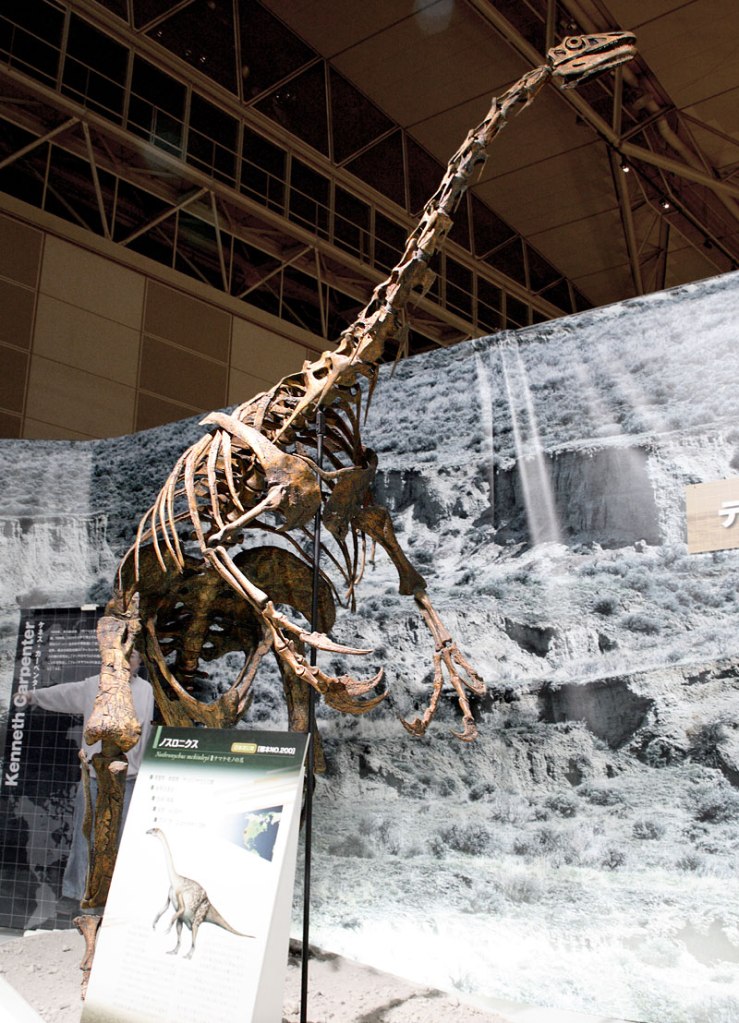
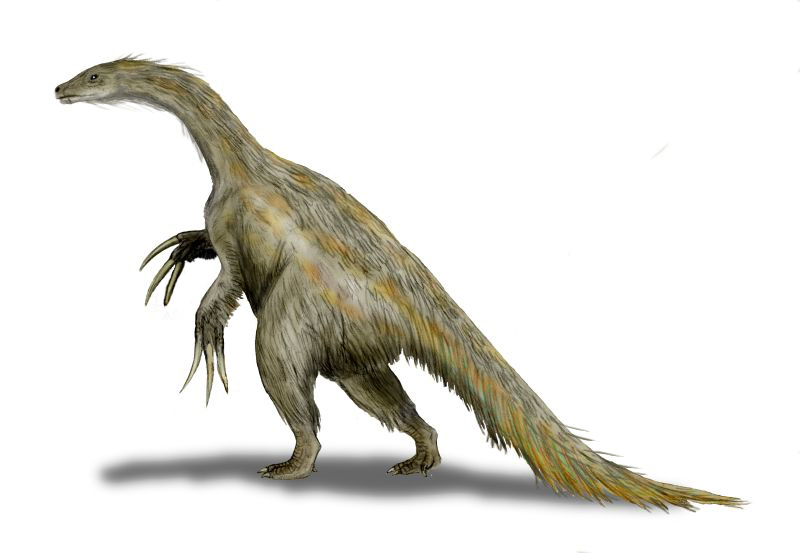
Standing about 3.5 meters tall and roughly 4.5 to 6 meters long, Nothronychus was a common sight in the late Cretaceous forests. Nothronychus was a member of the Therizinosaur family, notable for the massive sickle-shaped claws on their forearms, which could grow to be around 30 centimeters long. Despite what one might think, these are not the claws of a predator. They are, instead, the tools of a one-ton herbivore. Nothronychus had a beak with leaf-shaped teeth, which was attached to a long neck, a potbellied torso, and fairly short tail.
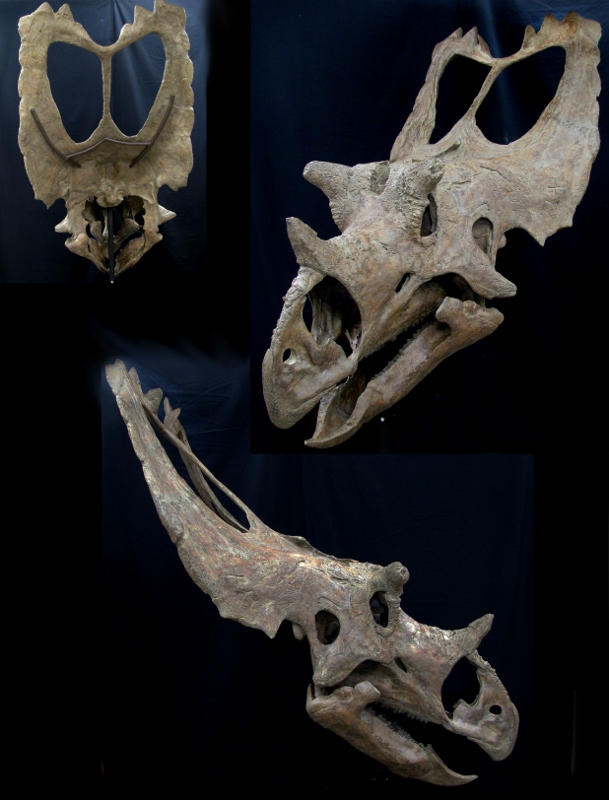
Nothronychus is a relatively recent discovery. The first skeleton to be identified as a new species first came to light in 2001, described by James Kirkland and Douglas Douglas G. Wolfe during a dig in the Zuni Basin of New Mexico. During the dig, a section of the ischium (the rear portion of the pelvis) was uncovered and thought to be part of the frill of a nearby Zuniceratops. Further investigation revealed the truth, and more pieces were quickly discovered and dubbed Nothronychus mckinleyi, Slothful Claw. While we don’t have an entire skeleton yet, a more complete example was recovered at the Big Water site in Southern Utah a year before, in 2000. It wasn’t determined to be a therizinosaurid until later, . This one lacks a skull, is larger and more robust creature than N. mckinleyi, but clearly related. It wasn’t until 2009 that is was given the name Nothronychus gaffami. Up until these discoveries, no therizinosaurids had been discovered outside of Mongolia and China.
We haven’t discovered a great deal about Therezinosauroid behaviors yet, but have made some inferences on their behavior and the purpose behind their massive claws based on animals with similar tools, such as ground sloths and giant pandas. Most paleontologists believe that the claws were used to either sever or pull branches down to nosh on tasty leaves. Other members of the Therezinosaurid family have provided a few more details on these bizarre creatures. Skin impressions found on Beipiaosaurus indicate that they were covered with a coat of down-like early feathers, giving them a shaggy appearance in most modern reconstructions. Further discoveries suggest a social order, with a large batch of fossilized eggs being discovered in the Gobi Desert in 2011. These eggs appeared to have all hatched, suggesting that there was a communal nesting site.
No doubt we’ll find more and more information about these fascinating creatures as time goes on, and discover more of their lifecycle, habits, and build.
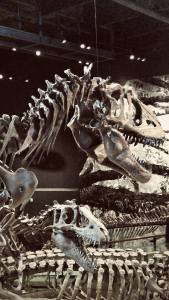 The name means ‘Different Lizard‘ and was found in Utah’s Cleveland-Lloyd Quarry, a site containing the densest concentration of Jurassic dinosaur bones in the world. Of the at least 74 individual dinosaurs found at the quarry, about 46 of them are Allosaurus specimens, according to the U.S. Bureau of Land Management.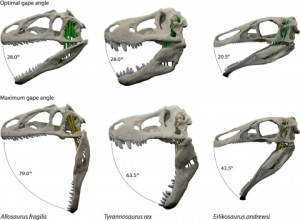
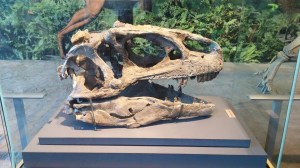 Allosaurus became the Utah state fossil in 1988 and can be seen in pretty much and dinosaur museum in Utah. At Dinosaur National Monument outside of Vernal, Utah you can see a real Allosaurus skull at the Carnegie Quarry wall. If you have been there or anywhere else that has an Allosaurus please send us your pictures in the comments!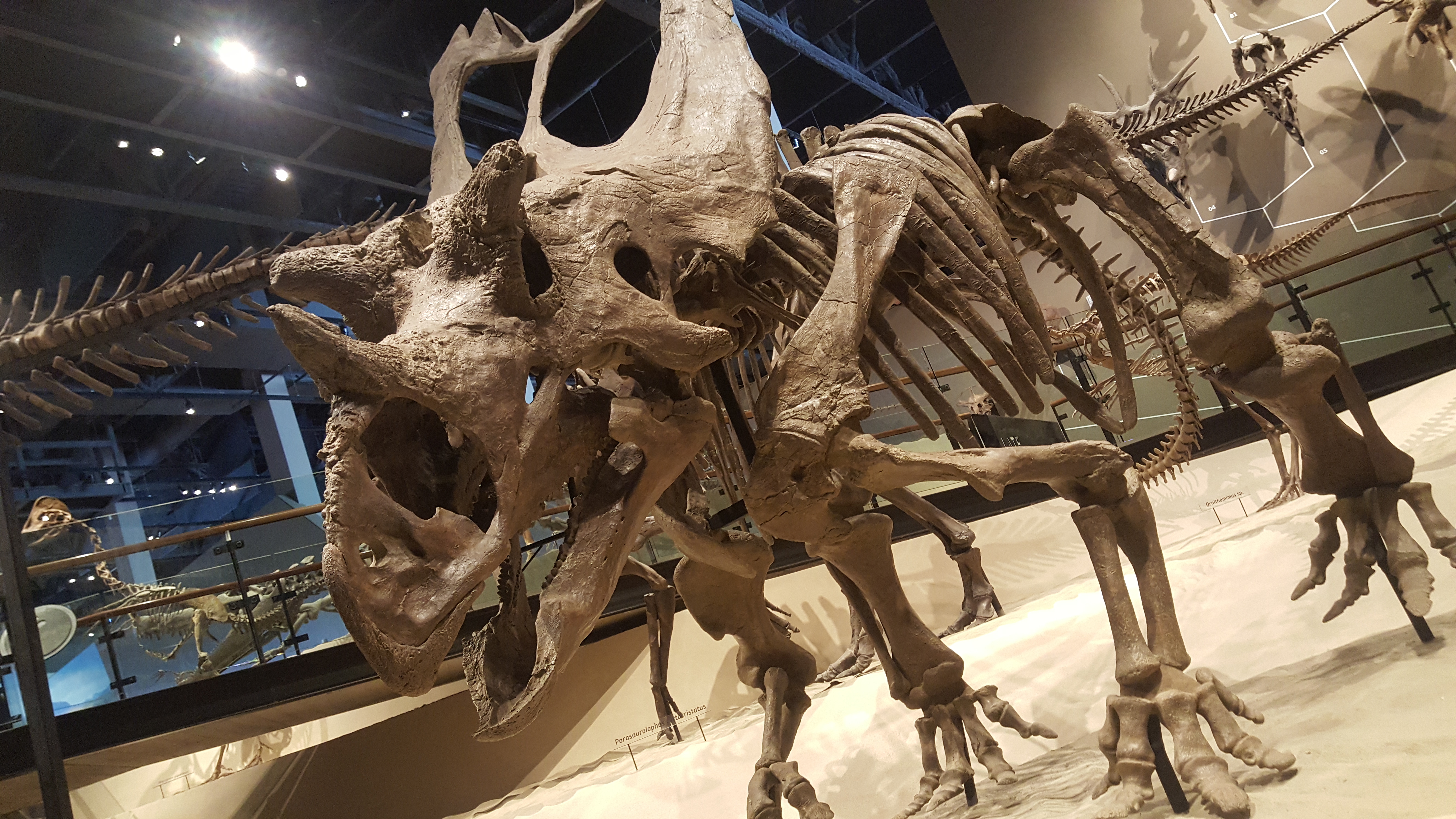
 to cause these animals to fossilize after they died.
